Tagged with: ECC AED


September 15, 2026
RapidSOS and the PulsePoint Foundation Partner to Connect 911 Directly to the Nation's Registry of Life-Saving Emergency Resources
New Integration Gives 911 Telecommunicators Real-Time Access to Registered AEDs, Naloxone, Epinephrine, and Bleeding-Control Kits
RapidSOS, the leading public safety AI company, today announced a new integration with the PulsePoint Foundation, which hosts and administers the National Emergency AED + Resource (NEAR) Registry. The integration connects RapidSOS directly to the NEAR Registry's database of AEDs, naloxone (Narcan), epinephrine, and bleeding-control kits, giving 911 telecommunicators immediate access to public-safety vetted life-saving resources during an emergency. Telecommunicators can use this information to direct callers to the appropriate resources—without leaving their existing workflow.
The integration is live today across RapidSOS, including its free tier, and is available to any Emergency Communications Center (ECC) nationwide at no additional cost. Georgia is the latest state to deploy it at scale, driven by the Mason Sells AED Coordination Act (SB399), which requires 911 to have access to an AED registry. The NEAR Registry is the national standard meeting that requirement.
Filed Under: Press Release, Highlights, News | Tagged With: RapidSOS Unite, RapidSOS, RapidSOS Integration, Mason Sells AED Coordination Act, NEAR Registry, NEAR Registry API, NEAR, National Emergency AED + Resource Registry, AED Registry, Georgia SB399, AED Map, AED Locator, AED Locations, Automated External Defibrillator, Automated External Defibrillator Registry, 911 AED, 911 AED Registry, emergency resource registry, life-saving resource registry, public safety technology, public safety AI, out-of-hospital cardiac arrest, OHCA, Sudden Cardiac Arrest, Sudden Cardiac Arrest AED, Bystander CPR, bystander defibrillation, Chain of survival, Naloxone, naloxone locator, Narcan, opioid overdose response, Epinephrine, epinephrine locator, EpiPen, anaphylaxis response, bleeding control kits, hemorrhage control, 911 Telecommunicators, emergency communications center, ECC, ECC AED, emergency dispatch, 911 dispatch technology, public safety answering point, PSAP, PSAP AED Registry, AED nearby, AED registry legislation, emergency resource mandate

August 6, 2023
APCO Intellicomm and PulsePoint provide free integration, displaying AED locations for 9-1-1 telecommunicators
Public safety telecommunicators utilizing APCO’s IntelliComm software can now quickly direct 9-1-1 callers during time-critical cardiac emergencies to the closest automated external defibrillator (AED). The life-saving advancement comes from the implementation of an AED geolocation plan between APCO’s IntelliComm and the PulsePoint Foundation.
The tool enables 9-1-1 telecommunicators to inform callers of the location of AEDs while using existing medical dispatch protocols within IntelliComm’s software, with no changes to workflow—saving critical time during life-threatening emergencies.
Each year in the U.S., there are approximately 360,000 Emergency Medical Services (EMS)-assessed cardiac arrests outside of a hospital and on average, less than 10 percent of victims survive. The keys to survival are early recognition, early CPR and early defibrillation. Action taken by bystanders prior to the arrival of EMS results in victims being two to three times more likely to survive.
Filed Under: Press Release, Highlights, News | Tagged With: APCO, Intellicomm, telecommunicators, AED Registry, AED Locations, aed.new, AED Map, AED Management, AED, emergency communications center, ECC, ECC AED, PSAP AED Registry, EMD, EMD AED Registry, EMD AED, Derek Poarch, APCO International, Sudden Cardiac Arrest, Hosted AED Registry, public safety, 911 AED, 911 AED Registry, IBM Watson Analytics, Emergency AED Registry

January 7, 2021
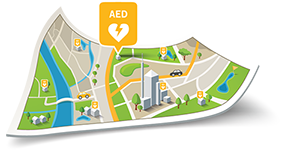
Emergency Telecommunicators Need Access to a Community AED Registry
Public Safety Answering Point (PSAP) telecommunicators are a critical link in the cardiac arrest chain of survival. Placing the proper tools in their hands can improve outcomes.
The PulsePoint Foundation provides PSAP technology to make "Is there an AED nearby?" an unnecessary question during cardiac arrest call processing while also advocating for broad adoption of this lifesaving capability. Our goal is for the telecommunicator to instead inform the caller of the location of nearby AEDs. Consider how much more effective it would be to say, “there is an AED at that store,” and direct the caller to “send someone to retrieve the AED from the customer service counter,” as CPR instructions begin? We back our advocacy and commitment with comprehensive and accessible resources. By providing exceptional, industry-supported AED registry solutions at no cost—and we genuinely mean free in all aspects—we strive to remove deployment impediments.
Filed Under: News, Highlights | Tagged With: AED Registry, AED, aed.new, 911 AED, AED Registry for dispatchers, Add an AED, Register an AED, FirstNet AED, AED Registry app, Nearby AED, Nearest AED, Dispatch recommend AED, Dispatcher recommended AED, Find AED, Locate AED, Source AED, Hosted AED Registry, Browser-based AED Registry, Cloud AED Registry, AED Management, AED Registry Management, Community AED Registry, Telecommunicator AED, Emergency Telecommunicators, ECC AED, Free AED Registry, No cost AED Registry, ProQA, ProQA AED Registry, Paramount AED Registry, Priority Dispatch AED, Priority Dispatch Registry, EMD AED, EMD AED Registry, Calltaker AED Registry, Call taker AED, AED Database, Cardiac Arrest AED, Sudden Cardiac Arrest AED, Where are AEDs located, Automated External Defibrillator Registry, Defibrillator Registry, Track AEDs, PAD Registry, Public Access Defibrillator, PAD AED Registry, Enhanced 9-1-1 AED, NG AED, NG Registry for AED, Find an AED, HeartSafe AED Registry, HeartSafe AED, National AED registry, AED Locator, AED Link, AED Registry Database, Priority Dispatch ProQA Paramount, Register a new AED, PSAP AED Registry, AED Registration, Tracking AEDs, Link AEDs, Online AED Registration, AED Program Management, AED Program Registry, AED Management Software, AED Log, AED Program